Saturday, October 11, 2008

Zanzarah ~ Title Theme

You take the role of Amy, who is pulled into Zanzarah, a magical world full of elves, goblins, dwarves and fairies. A paradise. But the world is threatening to plunge into chaos, fairies have even started to fight amongst themselves… It falls into your hands to find out what’s wrong there and how to help. You are not alone, though. On your journey you find friendly fairies who can help you fight against Chaos.

This game is soooo cute. Magical, lighthearted, wondrous and whimsical are some words I’d use to describe it. The title theme is one of my all-time favorite songs, perfectly setting the mood for what’s up ahead.

Here are the lyrics to this song as well as the full soundtrack.

Zanzarah Title Theme - Lyrics

At last
You found your way
To the realms of my world
Through timeless dreams
And visions
You always wish to pursue

Worlds may change
And roads may end
Shapes may shift and colors blend
But here on this side of the earth
Time’s forever still

Come with me
This world is yours to believe
Succumb to the realm of magic and myth
Into the unknown

You’ve come for a reason
Of which you may not know
Until the riddles are solved
And puzzles are pieced together

Oh, deep inside you
A wild flower grows
It knows what you seek

Come with me
Where mountains have ears
And waters have eyes
Where earth is floating
In a clear blue sky

Come with me

This song was performed by Kariina Gretere.
The full Zanzarah soundtrack is freely available for download.

Friday, August 15, 2008

What Should I Do With My Life?

Book Chronicles Quest to Answer 'Ultimate' Question

Listen Now: [8 min 43 sec]

Real MediaExplain these links
author Po Bronson
Courtesy Po Bronson

Po Bronson, author of What Should I Do With My Life?

“(When considering a life change), we let our fears govern our decisions. Rather than challenging the validity of those fears, we accept the boundaries set by those fears, and end up confining our search to a narrow range of possibilities, like the guy looking for his car keys under the streetlight because he’s afraid of the dark.”
Po Bronson
Debbie Brient
Courtesy Po Bronson

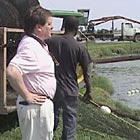
Debbie Brient, who left a job in sales to pursue a passion for conservation.

Rick Olson
Courtesy Po Bronson

Rick Olson changed his profession from lawyer to trucker, to have more time to spend with his young son.

Don Linn
Courtesy Po Bronson

Don Linn went from a career in investment banking to farming; and later, to being a book distributor.

Leela de Souza
Courtesy Po Bronson

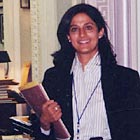
Leela de Souza has been a White House fellow (above), a ballerina, and a Stanford MBA. Most recently, her quest to do "things that really matter" has taken her to a marketing job with a biotech company.

Morning Edition, January 3, 2003 · Po Bronson calls it "the most obvious and universal question on our plates as human beings: What should I do with my life?"

Novelist and business writer Bronson spent two years interviewing more than 900 people who had weighed or were weighing that question. From his research came the book, What Should I Do With My Life? The True Story of People Who Answered the Ultimate Question.

For Morning Edition, Bronson describes what he learned from the people he interviewed, and focuses on four: Debbie Brient, once a sales executive; Rick Olson, a onetime lawyer; Don Linn, a former investment banker; and Leela de Souza, whose resume includes stints as a ballerina, Stanford MBA and White House fellow. Each approached their desire for a life change a little differently, he says. But like most of the people he interviewed, ultimately these four were searching for "a place where they can be content, grow roots a little, and make an impact."

In an interview with npr.org, Bronson tells more about the lessons behind people's life-changing quests -- including his own.

npr.org: You've said that the matter of what we should do with our lives is "the most obvious and universal question on our plates as human beings." After interviewing hundreds of people, how would you say most of us address what you call The Question -- do we do a pretty good job of meeting it head on, flounder hopelessly, avoid it with a vengeance?

Bronson: Most attempt to answer it with one eye open, one eye closed. We let our fears govern our decisions; rather than challenging the validity of those fears, we accept the boundaries set by those fears, and end up confining our search to a narrow range of possibilities, like the guy looking for his car keys under the streetlight because he’s afraid of the dark. Some broad examples: we confine ourselves to a range that is acceptable to our parents or our spouse; we confine ourselves to places inhabited only by people "like us," meaning of our class and education level; we place too much emphasis on being respected by an imaginary audience; we shy away from avocations that take a long time to mature and pay off.

I was inspired by people who had overcome these fears to look beyond the obvious choices. It wasn’t easy for them, but in a way that hard journey made the result even sweeter. It wasn’t just a matter of finding the right puzzle piece to match their skills; they had to grow as a person first.

Your radio report features four people who saw the need for a radical change in their lives, and have gone forth to make it. Let's talk a bit more about the stories of each of them, and the lessons you took away from them. Tell us how you learned about Debbie Brient, the sales executive turned conservationist, and what you think others could learn from her experience.

A lot of people have this notion, or maybe it’s a hope, that their calling will just make itself clear one day, as an epiphany. An epiphany is a religious notion, and we invoke the word "epiphany" any time we have a good idea, because it helps conjure a sort of divine certainty – we’re implying, "Hey, this wasn’t just my little idea, I got it straight from God." But I think this is a misappropriation.

In fact, true epiphanies are really rare. Of the 900 stories I learned, only three had genuine epiphanies. One heard a voice telling her to go to Maine, one heard a voice telling him to go to Guatemala, and Debbie Brient heard this voice telling her "Isn’t it clear!?" Well, epiphanies aren’t clear. These three people followed the voice, but were very unsure what they were doing. And they had to figure it out. To me, Debbie’s story is a lesson in clarity versus muddledness. We think it’s supposed to be clear. We think if it’s not clear, it must not be calling me. But in fact, even true callings are unclear, and even more so for those who don’t hear a voice.

You interviewed Rick Olson, who changed his career from lawyer to trucker. In your experience, will most people who ask themselves The Question wind up facing such a dramatic life change? And if they do, what will they need to know and do to carry it off?

Obviously, not everyone needs such a radical change. But Rick’s story demonstrates the significant potential for change we inherit when hard times strike. It's the hard times that force us to overcome the doubts that normally stop us from acting.

For people who are considering a dramatic life change like Rick’s, all they really need is to know they’re not alone, they’re not the only ones who’ve done this. That seems to help people –- to know they’re not crazy, that other people have done this and been happy.

Since you started your book research, you've followed Don Linn from a New York investment banking firm to a catfish and cotton farm, and now a book distributorship. You framed his answer to The Question in terms of him being able to live with his conscience. Do you believe many Americans stay in jobs that they feel require them to betray their morals or ethics? And what did you learn about people's decisions to get out of jobs like that?

I can’t quantify the number of people who feel their work is part of some unethical system. But it’s not uncommon. However, I found that despite their frustration, very few people change their life simply for ethics. They usually stick to the grind. They change their life when it gets personal –- when the system turns on them. In Don Linn’s case, he had moral problems with being ordered to push leveraged buyouts on clients that didn’t need them and couldn’t afford them. But those moral problems didn’t cause him to change. The day his life changed, he came home from New York (he lived in Dallas) and his daughter and son, then three and one years old, respectively, asked "Who is that man?" He’d spent so much time on airplanes, they didn’t recognize him. And that’s the point when it got personal.

The final person you profiled in the radio piece is Leela de Souza -- a gifted dancer, a White House fellow, a Stanford MBA, and still she wound up out of work, confused and depressed. You must have collected stories of people who faced up to The Question, did their best to craft an answer, and still have yet to get their happy ending, their ultimate fulfillment. What's the advice in that case?

It’s a process that takes many attempts, and you learn from the failed part of each attempt. Making mistakes is a necessary part of learning. All 55 of the stories in my book are failure stories –- where best intentions aren’t working out, and they have to figure it out from inside that hole. The answers lie more in our hearts than our minds. Leela is a very intelligent woman –- but she realized, after six months of unemployment, that finding her purpose is the one problem that’s not easier to solve if you’re smarter.

You list four specific areas where people take wrong turns in figuring out their answer to The Question: money, what you call "smarts," place and attitude. Can you talk a bit about each of those areas, and how people's approaches to them can confuse the search for the best course in life?

There is not room here for me to discuss these properly. I hope people will read the book. But, briefly, we make certain presumptions about how the world works, and then make decisions guided by those presumptions. Well, it all goes wrong when those basic presumptions are inaccurate. Those are presumptions more about how we want the world to work, rather than how it actually does. Here are four wrong presumptions, which we have wrongly accepted as true:

(1) That money is the shortest route to freedom.

(2) That we can think (or analyze) our way to an answer of where we belong.

(3) That we are autonomous from the environment that surrounds us.

(4) That our biggest obstacles are external, rather than internal.

You observed that almost everyone you interviewed for the book struggles with this life-direction question more than once. Is there such a thing as asking yourself this question too much, too often?

In the book I tell the story of a woman who had changed her career trajectory five times in 10 years. We met when she was on the cusp of yet another career change. But after some serious self-examination, she realized her hairtrigger desire to change came from her very tumultuous childhood (she moved frequently and her mother had five boyfriends growing up). In the year after this realization, she devoted her energy to defusing that craving for change.

So, the answer to your question is yes. Sometimes we need to decipher where our craving for change comes from.

Did you write this book because you knew so many people who were struggling with life-direction questions, or because you were facing that struggle yourself, or both? How do you think you've handled those points in your own life when you've asked and answered The Question?

Three years ago, I was wondering whether to get married again and have a family, or stay single and keep working on my writing career (which requires me to travel a lot and work many odd hours). I never thought I could do both. In these three years, I have done both -– the book is nothing less than a testament to me overcoming that fear. Not only is it the most important thing I’ve ever written, but my family was actively involved. My son, who’s not yet two, went on 17 trips during the reporting of the book, as I traveled across the country and both oceans to meet people in person. I no longer feel torn between these two loves. I’ve made a lot of mistakes in how I’ve answered this question in my life -- mistakes both in my career and personal life -- but writing this book was one of the few right things I’ve done.

Is there such a thing as the wrong answer to The Question?

I think that’s playing a game of semantics, when people say "There is no wrong answer because you learn from your mistakes and it’s all part of a process." I do think there are wrong turns and we should be willing to take a stand and call them out. Such as: when people betray themselves, when people betray others, when people cheat or lie or fool themselves, when people act unethically to get ahead, when people pretend they will get rich when they won’t, when fathers abandon support for their children, etcetera. The list of wrong answers is endless.

Wednesday, July 30, 2008

Structured programming

Edsger W. Dijkstra
Technological University
EINDHOVEN, The Netherlands

0. Introduction.

This working document reports on experience and insights gained in programming experiments performed by the author in the last year. The leading question was if it was conceivable to increase our programming ability by an order of magnitude and what techniques (mental, organizational or mechanical) should then be applied in the process of program composition. The programming experiments were undertaken to shed light upon these matters.

1. Program size.

1.0) My real concern is with intrinsically large programs. By "intrinsically large" I mean programs that are large due to the complexity of their task, in contrast to programs that have exploded (by inadequacy of the equipment, unhappy decisions, poor understanding of the problem, etc.). The fact that, for practical reasons, my experiments had thus far to be carried out with rather small programs did present a serious difficulty; I have tried to overcome this by treating problems of size explicitly and by trying to find their consequences as much as possible by analysis, inspection and reflection rather than by (as yet too expensive) experiments.

In doing so I found a number of subgoals that, apparently, we have to learn to achieve (if we don’t already know how to do that).

1.1) If a large program is a composition of N "program components", the confidence level of the individual components must be exceptionally high if N is very large. If the individual components can be made with the probability “p” of being correct, the probability that the whole program functions properly will not exceed

P=pN :

for large N, p must be practically equal to one if P is to differ significantly from zero. Combining subsets into larger components from which then the whole program is composed, presents no remedy:

pN/2 * pN/2 still equals pN !)

As a consequence, the problem of program correctness (confidence level) was one of my primary concerns.

1.2) The effort --be it intellectual or experimental-- needed to demonstrate the correctness of a program in a sufficiently convincing manner may (measured in some loose sense) not grow more rapidly than in proportion to the program length (measured in an equally loose sense). If, for instance, the labour involved in verifying the correct composition of a whole program out of N program components (each of them individually assumed to be correct) still grows exponentially with N, we had better admit defeat.

1.3) Any large program will exist during its life-time in a multitude of different versions, so that in composing a large program we are not so much concerned with a single program, but with a whole family of related programs, containing alternative programs for the same job and/or similar programs for similar jobs. A program therefore should be conceived and understood as a member of a family; it should be so structured out of components that various members of this family, sharing components, do not only share the correctness demonstration of the shared components but also of the shared substructure.

EWD268 - 1

So much for the large size of the individual programs and the large number of (potential) members of their family.

2. Program correctness.

2.0) An assertion of program correctness is an assertion about the net effects of the computations that may be evoked by this program. Investigating how such assertions can be justified, I came to the following conclusions:

2.1) The number of different inputs, i.e. the number of different computations for which the assertions claim to hold is so fantastically high that demonstration of correctness by sampling is completely out of the question. Program testing can be used to show the presence of bugs, but never to show their absence! Therefore, proof of program correctness should depend only upon the program text.

2.2) By a number of people it has been shown that program correctness can be proved. Highly formal correctness proofs have been given; also correctness proofs have been given for "normal programs", i.e. programs not written with a proof procedure in mind. As is to be expected (and nobody is to be blamed for that) the circulating examples are concerned with rather small programs and, unless measures are taken, the amount of labour involved in proving might well (c.q. will) explode with program size.

2.3) Therefore, I have not focused my attention on the question "How do we prove the correctness of a given program?" but on the questions "for what program structures can we give correctness proofs without undue labour, even if the programs get large?" and, as a sequel, "How do we make, for a given task, such a well-structured program?". My willingness to confine my attention to such "well-structured programs" (as a subset of the set of all possible programs) is based on my belief that we can find such a well structured subset satisfying our programming needs, i.e. that for each programmable task this subset contains enough realistic programs.

2.4) This what I call "constructive approach to the problem of program correctness" can be taken a step further. It is not restricted to general considerations as to what program structures are attractive from the point of view of provability; in a number of specific, very difficult programming tasks I have finally succeeded in constructing a program by analyzing how a proof could be given that a class of computations would satisfy certain requirements: from the requirements of the proof the program followed.

3. The relation between program and computation.

3.0) Investigating how assertions about the possible computations (evolving in time) can be made on account of the static program text, I have concluded that adherence to rigid sequencing disciplines is essential, so as to allow step-wise abstraction from the possibly different routing. In particular: when programs for a sequential computer are expressed as a linear sequence of basic symbols of a programming language, sequencing should be controlled by alternative, conditional and repetitive clauses and procedure calls, rather than by statements transferring control to labelled points.

3.1) The need for step-wise abstraction from local sequencing is perhaps most convincingly shown by the following demonstration:

Let us consider a "stretched" program of the form

"S1; S2; . . .; SN" (1)

and let us introduce the measuring convention that when the net effect of the execution of each individual statement Sj has been given, it takes N steps of reasoning to establish the correctness of program (1), i.e. to establish that the

EWD268 - 2

cumulative net effect of the N actions in succession satisfies the requirements imposed upon the computations evoked by program (1).

For a statement of the form

"if B then S1 else S2" (2)

w[h]ere, again, the net effect of the execution of the constituent statements S1 and S2 has been given; we introduce the measuring convention that it takes 2 steps of reasoning to establish the net effect of program (2), viz. one for the case B and one for the case non B.

Consider now a program of the form

"if B1 then S11 else S12;
if B2 then S21 else S22;
.
.
.
.
if BN then SN1 else SN2" (3)

According to the measuring convention it takes 2 steps per alternative statement to understand it, i.e. to establish that the net effect of

"if Bi then Si1 else Si2"

is equivalent to that of the execution of an abstract statement S1. Having N such alternative statements, it takes us 2N steps to reduce program (3) to one of the form of program (1); to understand the latter form of the program takes us another N steps, giving 3N steps in toto.

If we had refused to introduce the abstract statements Si but had tried to understand program (3) directly in terms of executions of the statements Sij, each such computation would be the cumulative effect of N such statement executions and would as such require N steps to understand it. Trying to understand the algorithm in terms of the Sij implies that we have to distinguish between 2N different routings through the program and this would lead to N*2N steps of reasoning!

I trust that the above calculation convincingly demonstrates the need for the introduction of the abstract statements Si. An aspect of my constructive approach is not to reduce a given program (3) to an abstract program (1), but to start with the latter.

4. Abstract data structures.

4.0) Understanding a program composed from a modest number of abstract statements again becomes an exploding task if the definition of the net effect of the constituent statements is sufficiently unwieldy. This can be overcome by the introduction of suitable abstract data structures. The situation is greatly analogous to the way in which we can understand an ALGOL-program operating on integers without having to bother about the number representation of the implementation used. The only difference is that now the programmer must invent his own concepts (analogous to the "ready-made" integer) and his own operations upon them (analogous to the "ready-made" arithmetic operations).

4.1) In the refinement of an abstract program (i.e. composed from abstract statements operating on abstract data structures) we observe the phenomenon of "joint refinement". For abstract data structures of a given type a certain representation is chosen in terms of new (perhaps still rather abstract) data structures. The immediate consequence of this design decision is that the abstract statements operating upon the original abstract data structure have to be redefined in terms of algorithmic refinements operating upon the new data structures in terms of which it was decided to represent the original abstract data structure. Such a joint refinement of data structure and associated statements should be an isolated unit of the program text: it embodies the immediate consequences of an (independent) design decision and is as such the natural unit of interchange for program modification. It is an example of what I have grown into calling "a pearl".

EWD268 - 3

5. Programs as necklaces strung from pearls.

5.0) I have grown to regard a program as an ordered set of pearls, a "necklace". The top pearl describes the program in its most abstract form, in all lower pearls one or more concepts used above are explained (refined) in terms of concepts to be explained (refined) in pearls below it, while the bottom pearl eventually explains what still has to be explained in terms of a standard interface (=machine). The pearl seems to be a natural program module.

5.1) As each pearl embodies a specific design decision (or, as the case may be, a specific aspect of the original problem statement) it is the natural unit of interchange in program modification (or, as the case may be, program adaptation to a change in problem statement).

5.2) Pearls and necklace give a clear status to an "incomplete program", consisting of the top half of a necklace; it can be regarded as a complete program to be executed by a suitable machine (of which the bottom half of the necklace gives a feasible implementation). As such, the correctness of the upper half of the necklace can be established regardless of the choice of the bottom half.

5.3) Between two successive pearls we can make a "cut", which is a manual for a machine provided by the part of the necklace below the cut and used by the program represented by the part of the necklace above the cut. This manual serves as an interface between the two parts of the necklace. We feel this form of interface more helpful than regarding data representation as an interface between operations, in particular more helpful towards ensuring the combinatorial freedom required for program adaptation.

5.4) The combinatorial freedom just mentioned seems to be the only way in which we can make a program as part of a family or "in many (potential) versions" without the labour involved increasing proportional to the number of members of the family. The family becomes the set of those selections from a given collection of pearls that can be strung into a fitting necklace.

6. Concluding remarks.

6.0) Pearls in a necklace have a strict logical order, say "from top to bottom". I would like to stress that this order may be radically different from the order (in time) in which they are designed.

6.1) Pearls have emerged as program modules when I tried to map upon each other as completely as possible, the numerous members of a class of related programs. The abstraction process involved in this mapping turns out (not, amazingly, as an afterthought!) to be the same as the one that can be used to reduce the amount of intellectual labour involved in correctness proofs. This is very encouraging.

6.2) As said before, the programming experiments have been carried out with relatively small programs. Although, personally, I firmly believe that they show the way towards more reliable composition of really large programs, I should like to stress that as yet I have no experimental evidence for this. The experimental evidence gained so far shows an increasing ability to compose programs of the size I tried. Although I tried to do it, I feel that I have given but little recognition to the requirements of program development such as is needed when one wishes to employ a large crowd; I have no experience with the Chinese Army approach, nor am I convinced of its virtues.

August 1969


Transcribed by Ham Richards

Last revised on Tue, 8 Jul 2003.

The Programming Task Considered as an Intellectual Challenge

Edsger W. Dijkstra

In contrast to my original intention to address you without the use of written notes, I have decided to read the text to you verbatim as it now lies before my very eyes. The chosen procedure often leads to a less lively, if not even soporific, performance; I can only express my hope that the duller presentation of my talk is somewhat compensated for by its contents ..... in one way or another. I feel it my duty and pleasure to warn you that this time I shall make full use of the traditional prerogative of the speaker, viz. to say what he wants to say, rather than to tell what his audience might want to hear. I am well aware of the fact that in consequence of this decision I might never be invited again, but if that would be for the loss or benefit of our confession is not for me to judge .....

Let me now mention and describe to you the experience which led to my decision to address you in the manner just announced. It was the second "Conference on Software Engineering", sponsored by the NATO Science Committee and held in Rome during the last week of October 1969. Had I been brought up in the tradition of the British understatement, I would probably have described that conference as "not completely successful"; now, however, the first expressions coming into my mind to describe, are rather "an utterly miserable affair" or "a wet mess".

In one respect, I am afraid, it was an honest conference: its sorry state may have been a true reflection of the present state of the art of software engineering as generally understood and practised. But before trying to trace possible origins of this sorry state of affairs, let me tell you what happened at the last day of the conference. After that, you can judge for yourself. The incident has been witnessed by some ten or twenty people.

Around five o'clock, just before the closing of the conference, I saw a pile of reproduced notes written by one of the participants, who handed a copy to me when he saw that I showed some signs of interest. Standing next to him I started to scan his notes, only to see to my horror that also this document, alas, contained nothing more meaningful than the pompous, superficial bla-bla-bla that we had been exposed to all through the week. My disgust got the better of me, I was seduced to rudeness and after one and a half page I put the paper back on the pile and turned myself, without any further comments, away from its author. End of the first act of this drama.

When the curtain rises for the second act it is four hours later, nine o'clock in the evening. Guilt about my rude behaviour is gnawing at my mind and to relieve it I pick the paper up again to reread it; this time I start at the end, planning to read it backwards. Then, at last, my eyes are opened: the paper has carefully worked towards a climax and this last sentence is glorious and superb nonsense. I suddenly discover that I had nearly been fooled by an elaborate leg pull: it was a parody, it was satire, produced by a kindred spirit! Full of excitement I show the document (that very few had seen) to the remaining participants that were still in the hotel: then people are reading it, smiling, chuckling or roaring with laughter, according to their temperament. But some don't laugh at all because they don't believe that it is satirical. In the argument that follows, the question "Is this a joke or is this serious?" remains unanswered and leaves the group divided into two camps. End of second act.

In the third act the author, who had been absent during the second act, returns and tells that this document had not been written as a parody, that he had recorded the conference as he had seen it. End of drama.

My conclusion is that when a number of people who are recognized as knowledgeable in the field cannot settle among themselves whether an apparently professional paper is serious or not, that this is alarming, that the present state of the art is indeed a sorry state of the art.

Another unmistakable symptom of the conference's misery was that some people, in reaction to it, changed their air line reservations and left before the conference had run to completion. I myself would have done so, if such a change of schedule would not have caused inconveniences to some other private arrangements I happened to have made.

I hope that the above will be accepted as a proper documentation for establishing, even beyond the mildest doubts, the existence of the misery. If I left it at that, I would indeed do a poor job, so my next step will be a somewhat closer scrutiny of the symptoms of the illness in order to see whether we can find at least some of its causes.

The most obvious symptom of the misery was that most of the discussion was dragged into the vulgar, but nonetheless rather fruitless controversy between "theory" and "practice". I know, and of course all of us know, that the qualifications "Theoretical" and "Practical" with exclusion of the other are applicable to quite a large percentage of the workers in the field. There are people who refuse to have anything to do with practical applications. There is the story of the man who was preparing his PhD Thesis under Hardy and the subject had to do with Fourier integrals; one day he was so reckless as to mention to Hardy that some people really used Fourier integrals, upon which Hardy answered that under those circumstances the man had to look for another subject. At the other side of the deplorable fence we have those that have given up hope of ever finding anything useful in the work of their more theoretically inclined colleagues; and of course, quite a lot of it is utterly useless. Although the distinction between "theoretical" and "practical" people may be applicable to, say, 95 percent of the workers in the field and the distinction can therefore be regarded as statistically significant, yet I call it fruitless, because it leaves no room for exploring what benefits could be derived from the remaining five percent, i.e. those people and those activities for which neither the qualification "untheoretical" nor the qualification "unpractical" can be justified. To ignore those five percents is a simplification of thought which throws away the child with the bathwater, and that is why I call the distinction vulgar and fruitless.

To attack the fence in another way: I am employed by a Technological University and educational product of my department gets the title of "Mathematical Engineer". I have often observed that many, in particular Americans, start laughing when they hear that title: it strikes them as a contradictio in terminis, for by definition they regard the engineer as useful and the mathematician as useless. I speak from another cultural tradition — otherwise I would not have undertaken my job. This implies that I get extremely suspicious when the engineer justifies adhoccery by an appeal to the presumed law of nature, summarized by "quick and dirty", for from my experience and from my understanding I feel that "quick and elegant" is a much more likely combination. I get suspicious when the mathematician regards the formality of approach as a holy goal all by itself, rather than as a profane means which might be useful (and occaisionally even vitally effective). Roughly speaking, a formal treatment is related to my power of understanding as an attorney's act to my sense of justice.

From now onwards I refuse to make that vulgar distinction, I hope that I have made my position quite clear and that I have given everyone his equal share and, by the way, I am vaguely wondering whether I have turned the 95 percent into my friends or my foes .....

OK, that was my introduction. Let me now start the lecture proper.

The starting point of my considerations is to be found at the "software failure". One or two years ago the wide-spread existence of this regrettable phenomenon has been established beyond doubt; as far as my information tells me, the software failure is still there as vigorous as ever and its effects are sufficiently alarming to justify our concern and attention. What, however, is it?

Depending on the specific instance of failure one chooses, it can be described in many, many ways. One of the most common forms starts with an exciting software project, but as it proceeds, deadlines are violated and what started as a fascinating thriller slowly turns into a drama, to be played by an ever-increasing number of actors, the majority of which know perhaps their own part but have certainly lost their grasp on the meaning of the performance as a whole. At last the curtain falls, only because it is too late to go on any more, but not because anything has really been completed, for the final piece of software is still full of bugs and will remain so for the rest of its days. There are other forms, but they all have in common, that it turns out to be very, very difficult to get the whole program working with an acceptable degree of reliability.

When we try to explain the present as the natural outcome of the recent past, we get a better understanding of what has happened. In the past ten, fifteen years, the power of commonly available computers has increased by a factor of a thousand. The ambition of society to apply these wonderful pieces of equipment has grown in proportion and the poor programmer, with his duties in this field of tension between equipment and goals, finds his task exploded in size, scope and sophistication. And the poor programmer just has not caught up. Looking backwards, we must conclude that the difficulty of the tasks ahead have been grossly underestimated in the past. Extrapolations concerning the numbers and power of computers to be installed have been made, but society's preparation for this oncoming wave of machinery has been the call for more and more programmers, rather than for more capable ones, who could derive their greater capability from a better understanding of the nature of the programming task.

How little the general programmer's attitude towards his work has changed during this period can be demonstrated in a variety of ways. During that NATO conference in Rome a number of debugging aids were discussed; it was then remarked by one of the participants that all the techniques mentioned were already known and used fifteen years ago, a statement that no one did deny! Secondly, the advent of higher level languages has been hailed as a tremendous step forward. OK, but is it sufficient? It enables us perhaps to cope with a factor 10 in scope, but not with a factor 1000. In the old days, programs of one or two thousand assembly code instructions were horrors, but in the mean time higher level language programmers produce — admittedly — larger programs of exactly the same degree of unreadability and unreliability, in which the role of the old machine-code tricks has been taken over by cunning higher level language tricks. Truly, I cannot see the difference ..... The conclusion is that, in spite of the factor thousand in scope, present day programming tries to solve its problems essentially with the same old methods. And therefore, if we want to improve matters, we should make it our serious business to minimize the usage of what is now by far our scarcest resource, viz. brainpower. The burning question is "Can we get a better understanding of the nature of the programming task, so that by virtue of this better understanding, programming becomes an order of magnitude easier, so that our ability to compose reliable programs is increased by a similar order of magnitude?"

The fact that program reliability becomes a key issue is not only shown to us by the evidence around use, it is also quite easy to see why. A very large program is, by necessity, composed from a large number, say N, individual components and the fact that N is large implies that the individual program components must be produced with a very high confidence level. If, for each individual component the probability of being right equals p, for the whole program the probability P of being right will satisfy

PpN

and if we want P to differ appreciably from zero, p must be very close to one, because N is so large.

A common approach to get a program correct is called "debugging" and when the most patent bugs have been found and removed one tries to raise the confidence level further by subjecting the piece of program to numerous test cases. From the failures around us we can derive ample evidence that this approach is inadequate. Believe it or not, but it has been suggested (at that very NATO conference in Rome) that what we really need now are "automatic test case generators" by which pieces of program to be validated can be exercised still more extensively. But will this really help? I don't think so.

When faced with a mechanism — be it hardware or software — one can ask oneself "How can I convince myself of its being correct?" As long as we regard the mechanism as a black box, the only thing we can do is to subject the mechanism to all possible inputs, all the time checking whether it produces the correct outputs. But for the kind of mechanisms we are considering this is absolutely out of the question, even for the fastest and simplest mechanisms. At my University we have a machine with a fixed point multiplier taking considerably less than 100 microseconds per multiplication. The total time taken by all possible multiplication, however, will exceed 30000 years. And that is only a multiplier! The number of cases one can try in practice is a negligable fraction of the total number of possible cases and whole classes of in some critical cases can be missed. The first moral of this story is that program testing can be used very effectively to show the presence of bugs, but never to show their absence.

But as long as we regard the mechanism as a black box, testing is the only thing we can do. The conclusion is that we cannot afford to regard the mechanism as a black box, i.e. we have to take its internal structure into account. One studies its internal structure and on account of this analysis one convinces oneself that if such and such cases work "all others must work as well". That is, the internal structure is exploited to reduce the number of still necessary testcases, for all the other ones (the vast majority) one tries to convince oneself by reasoning, the only problem being that the necessary amount of reasoning often becomes excessive.

This function of the mechanism's internal structure opens a new way to attack the reliability problem. Once we have seen that the confidence level can only be reached by virtue of the structure of the program, that the extent to which the program correctness can be established is not purely a function of its external specifications and behaviour, but depends critically upon its internal structure, then we can invert the question and ask ourselves "What forms of program structuring can we find, what elements of programming style and what forms of discipline, all for the benefit of the confidence level of our final product?"

Instead of trying to devise methods to establish the correctness of arbitrary, given programs, I am now looking for the subclass of "intellectually manageable programs", which can be understood and for which we can justify our belief in their proper operation under all circumstances without excessive amounts of reasoning. This is done in order to reduce the number of testcases needed; in the case of software I see no reason at all, why this approach could not be so effective that the number of testcases is eventually reduced to zero, i.e. that correctness can be shown a priori. Already now, debugging strikes me as putting the cart before the horse: instead of looking for more elaborate debugging aids, I would rather try to identify and to remove the more productive bug-generators!

In short, I suggest that the programmer should continue to understand what he is doing, that his growing product firmly remain within his intellectual grip. It is my sad experience that this suggestion is repulsive to the average experienced programmer, who clearly derives a major part of his professional excitement from not quite understanding what he is doing. In this streamlined age, one of our most undernourished psychological needs is the craving for Black Magic and apparently the automatic computer can satisfy this need for the professional software engineer, who is secretly enthralled by the gigcantic risks he takes in his daring irresponsibility. For his frustrations I have no remedy .....

Looking for "intellectually manageable" program structures one is immediately faced with the question "But how do we manage complex structures intellectually? What mental aids do we have, what patterns of thought are efficient? What are the intrinsic limitations of the human mind that we had better respect?" Without knowledge and experience, such questions would be hard to answer, but luckily enough our culture harbours, with a tradition of centuries, an intellectual discipline whose main purpose it is to apply efficient structuring to otherwise intellectually unmanageable complexity. This discipline is called "Mathematics". If we take the existence of the impressive body of Mathematics as the experimental evidence for the opinion that for the human mind the mathematical method is indeed, the most effective way to come to grips with complexity, we have no choice any longer: we should reshape our field of programming in such a way that their methods of understanding become equally applicable, for there are no other means. As an aside, I would like to point out that you cannot put aside my recommendation by saying "Oh gosh, yet another mathematician trying to sell the importance and universal applicability of his subject," because I happen not to be trained as a mathematician; I consider myself to be a programmer ..... But I have been asking myself for, say, the last two years, what kind of programs I would care to produce if I wanted to exploit my powers of abstraction for the purpose of understanding as effectively as is done in any other field of mathematics. In particular I have been investigating how one can use one's power of abstraction and one's ability to introduce concepts in order to achieve that. The number of cases between which is to be distinguished in one's reasoning, combine additively rather than multiplicatively. I would like to use the next part of my lecture to give you in bird's eye view a survey of my conclusions.

1) When programming, one should constantly bear in mind that although the program text is the last thing that leaves the programmer's hands, the true subject matter of his trade consists of the possible computations that may be evoked by his commands, the computations, the "making" of which he delegates to the machine. When we say, sloppily, that a program is OK, we mean that the corresponding computations satisfy the requirements. In other words, we should regard the programmer's activity not as "producing programs", but rather as "designing a large class of computations". The obligation to keep our intellectual grip on what may happen in time, while the static program text is the last thing we can lay our hands upon, the obligation to understand the computations as they evolve in time via the tangible program text, yields an urgent plea to keep the sequencing rules, i.e. the mapping between the progress through the program text and the progress through the computation, as straightforward as possible. As a result I decided to abstain in sequential programming from the goto statement and to perform all sequencing control by conditional, alternative and repetitive clauses and the subroutine mechanisms. In view of our obligation to bridge mentally the conceptual gap between the static program text and the dynamic computations, I came identify the goto statement as one of the combinatorial complexity generators I was looking for.

2) Another conclusion especially related to sequencing is the following. Whenever a construction is composed by means of a sequencing clause, encapsule it and find a description of its net effect in which the fact that it contains a clause is no longer transparent. If to write

"if x <>then x := -x"

this means "replace x by its absolute value" and the latter description is equally applicable to both cases. And if you have not a ready-made function (such as the absolute value) at your disposal in terms of which to describe the net effect of such a compound statement, invent this function and be sure that its properties are nice and also the ones you want. If you cannot find such a function, don't ignore that warning, for then you are on the verge of messing things up. To give you an analogy: when programming in machine code you can appeal to the add-instruction but in doing so it is immaterial for you whether the hardware invoked has a serial or a parallel adder.

3) The above encapsulation of the internal structure of a program component is a specific instance of a more general principle, that we find applied in the structure of any mathematical theory: whenever a piece of mathematical reasoning appeals to a theorem, the only thing that matters on that level is what the theorem asserts and on that level it is equally immaterial how that theorem has been proved (elsewhere). An appeal to a theorem is not an abbreviation for a specific one of its possible proofs, the existence of the theorem as such allows the user to forget about its proof. We can — and should — apply the same principle in program composition, where it is rewarding to separate for each program component clearly "what it does" and "how it works". With the possible exception of the recursive routine, the level in which a component is used on account of what it does is always disjoint from the level which is concerned with how it works. These two sides of the same coin are very well known in the relation between main program and the subroutines it calls; our vision of this relation, however, becomes blurred as soon as we regard the calling sequence as an abbreviation of the body and as a result, try to understand the local activity at the same, homogeneous semantic level; one has then mentally destroyed a useful structure. This widespread confusion, I am sorry to say, seems to have been promoted and to be kept alive by Programming Linguistics, as inspired by Automata Theory.

4) Was the previous point that it is unwise to take the internal structure of a program component into account on the level where it is used on account of what it does, this point makes the same statement with respect to compound data structures, which are ultimately represented by aggregates of variables of more primitive types. The levels in which only the collection of the possible values matter is quite distinct from the level which is concerned with the question how these composite values can be represented by aggregates of values of simpler types. One of the most common sources of program errors seems to be that an operation on a variable is inadvertently coded in terms of components of a specific representation. To give again a very simple example: for a binary machine one may be tempted to replace the question "is this integer even?" by "is its least significant digit zero?". Later, going with the program from one binary machine to another one discovers that this translation is not valid when negative numbers are represented by 1's complements. With the subroutine we have the two sides of the operational coin, viz. "what does it do for you" versus "how does it"; with abstract data types we have the two sides of the representational coin, viz. "what values can it take" versus "how are these values represented". Most current programming languages cater via the subroutine mechanism reasonably well for the operational abstraction but their mechanisms for representational abstraction, if any, are less convincing. The possibility to have representational abstraction reflected in the program code seems, however, equally essential.

5) A program should be regarded not as an object all by itself but as a member of a class of related programs, containing both alternative programs for the same job and similar programs for similar jobs. We wish to regard transition from one member of this class to another member of this class as replacing one or more program modules by one or more alternative program modules. Hereby insisting that the correctness proof for the unaffected modules and their interrelationship remains unaffected as well. The analysis of the latter requirement gave me a very much clearer understanding of how different levels of abstraction can be distinguished in a large program and how the distinction between these various levels of abstraction can be used to good advantage, and it enabled me to give a reasonably specific contents to the goal of "program modularity", which is often hardly more than a motherhood statement. Specific consequences of this analysis have been
5a) a proper module is in general more than a subroutine: in its general form it reflects — or "documents", if you wish — all consequences of a locally independent design decision, in general involving a set of joint representational and operational refinements;
5b) the adequacy of context-free methods for representing program structure seems to have been over-estimated.

So far for the survey of the conclusions I reached when I tried to reshape our programming activity into one which is better adapted to our mental capacities and limitations. I could only give you a bird's eye view of them; yet I hope that you have grasped some of their flavour and, possibly even, some concrete guidance. The survey is by no means complete, other insights will follow, perhaps as the fruits of my own activity but hopefully they will be gained by others as well.

Although I have done my best to be as clear as possible, I fear that I must have failed to reach anyone in my audience — if any — who, on account of his current environment, identifies the task of programming with the task of writing programs in FORTRAN — a programming tool which, indeed, was a great step forward when it was conceived some fifteen years ago but which, by now, should be regarded as a lower level language, as a low grade coding device. If he sticks to that conception of his task, he will fail to understand me, as one of my morals is that in the mean time his programming tool and the thinking habits induced by, have grown hopelessly inadequate. This fear of being misunderstood is, alas, supported by many a disappointing experience. As a teacher it is my job to help programmers in clearing up their own thinking. Often this is a highly rewarding activity, equally delightful and instructive for both parties. But when talking to the produce as grown in what is getting known as "the pure FORTRAN environment", I am usually baffled, for unsuspected depths of misunderstanding open themselves before my very eyes. It is well known that we don't gain automatically from every experience, on the contrary, that the wrong experience may easily corrupt the soundness of our judgement. In the case of FORTRAN, it is my impression that its intellectually degrading influence is not commonly recognized, that too few people realize that the sooner we can forget that it ever existed, the better, as it is now too inadequate, too difficult, and therefore too expensive and too risky to use.

In connection to the preceding paragraph about FORTRAN I would like to give a short explanation of my silence about COBOL. The point is that I have neither first-hand nor second-hand experience with COBOL's influence on its users. But the preceding paragraph was misunderstood by one of my colleagues who came from the mixed FORTRAN - COBOL environment: he was terribly puzzled, saying "Why attack FORTRAN's influence? For COBOL's influence is an order of magnitude worse!" End of explanation.

Meine verehrte Hörer und Hörerinnen — this had to be said in German as my English does not cater for this! — let me come to my final conclusions. Automatic computers are with us for twenty years and in the course of that period of time they have proved to be extremely flexible and powerful tools, the usage of which seem to be changing the face of the earth (and the moon, for that matter!). In spite of their tremendous influence on nearly every activity, whenever they are called to assist, it is my considered opinion that we underestimate the computer's significance for our culture as long as we only view them in their capacity of tools that can be used. In the long run that may turn out to be but a ripple on the surface of our culture. They have taught us much more: they have taught us that programming any non-trivial performance is really very difficult and I expect a much more profound influence from the the advent of the automatic computer in its capacity of a formidable intellectual challenge which is unequalled in the history of mankind. This opinion is meant as a very practical remark, for it means that unless the scope of this challenge is realized, unless we admit that the tasks ahead are so difficult that even the best of tools and methods will be hardly sufficient, the software failure will remain with us. We may continue to think that programming is not essentially difficult, that it can be done by accurate morons, provided you have enough of them, but then we continue to fool ourselves and no one can do so for a long time unpunished.

Finally: from my words some of you may have concluded that I am just spiteful and bitter. Let me reassure you: I am neither spiteful, nor bitter. Not yet ..... although I must admit that the major part of computing science (or perhaps more accurately: Programming Folklore) often strikes me as unchallenged prejudices, repeated over and over again as articles of faith. But in my introduction I have announced that I should say what I wanted to say. I know that I have used strong language and harsh words — but the time to be gentle has passed: the situation is much too serious to be covered by politeness.

The floor is now open for discussion and I thank you for your patience.

Eindhoven, dec. 1969.


Transcribed by Daniel C McCarthy.
Revised Mon, 17 Dec 2007.

A Case against the GO TO Statement

by Edsger W.Dijkstra
Technological University
Eindhoven, The Netherlands

Since a number of years I am familiar with the observation that the quality of programmers is a decreasing function of the density of go to statements in the programs they produce. Later I discovered why the use of the go to statement has such disastrous effects and did I become convinced that the go to statement should be abolished from all "higher level" programming languages (i.e. everything except –perhaps- plain machine code). At that time I did not attach too much importance to this discovery; I now submit my considerations for publication because in very recent discussions in which the subject turned up, I have been urged to do so.

My first remark is that, although the programmer's activity ends when he has constructed a correct program, the process taking place under control of his program is the true subject matter of his activity, for it is this process that has to effectuate the desired effect, it is this process that in its dynamic behaviour has to satisfy the desired specifications. Yet, once the program has been made, the "making" of the corresponding process is delegated to the machine.

My second remark is that our intellectual powers are rather geared to master static relations and that our powers to visualize processes evolving in time are relatively poorly developed. For that reason we should do (as wise programmers aware of our limitations) our utmost best to shorten the conceptual gap between the static program and the dynamic process, to make the correspondence between the program (spread out in text space) and the process (spread out in time) as trivial as possible.

Let us now consider how we can characterize the progress of a process. (You may think about this question in a very concrete manner: suppose that a process, considered as a time succession of actions, is stopped after an arbitrary action, what data do we have to fix in order that we can redo the process until that very same point?) If the program text is a pure concatenation of, say, assignment statements (for the purpose of this discussion regarded

EWD215 - 1

as the descriptions of single actions) it is sufficient to point in the program text to a point between two successive action descriptions. (In the absence of go to statements I can permit myself the syntactic ambiguity in the last three words of the previous sentence: if we parse them as "successive (action descriptions)" we mean successive in text space, if we parse as "(successive action) descriptions" we mean successive in time.) Let us call such a pointer to a suitable place in the text a "textual index".

When we include conditional clauses ("if B then A"), alternative clauses ("if S then A1 else A2"), choice clauses as introduced by A.R.Hoare ("case[i] of(A1, A2,.....,An)") or conditional expressions as introduced by J.McCarthy ("B1 → E1, B2 → E2,....., Bn → En"), the fact remains that the progress of the process remains characterized by a single textual index.

As soon as we include in our language procedures we must admit that a single textual index is no longer sufficient: in the case that a textual index points to the interior of a procedure body the dynamic progress is only characterized when we also give to which call of the procedure we refer. With the inclusion of procedures we can characterize the progress of the process via a sequence of textual indices, the length of this sequence being equal to the dynamic depth of procedure calling.

Let us now consider repetition clauses (like "while B repeat A" or "repeat A until B"). Logically speaking, such clauses are now superfluous, because we can express repetition with the aid of recursive procedures. For reasons of realism I don't wish to exclude them: on the one hand repetition clauses can be implemented quite comfortable with present day finite equipment, on the other hand the reasoning pattern known as "induction" makes us well equipped to retain our intellectual grasp on the processes generated by repetition clauses. With the inclusion of the repetition clauses textual indices are no longer sufficient to describe the dynamic progress of the process. With each entry into a repetition clauses, however, we can associate a so-called "dynamic index", inexorably counting the ordinal number of the corresponding current repetition. As repetition clauses (just as procedure calls) may be applied nestedly, we find that now the progress of the process can always be uniquely characterized by a (mixed) sequence of textual and/or dynamic indices.

EWD215 - 2

The main point is that the values of these indices are outside programmer's control: they are generated (either by the write up of his program or by the dynamic evolution of the process) whether he wishes or not. They provide independent coordinates in which to describe the progress of the process.

Why do we need such independent coordinates? The reason is –and this seems to be inherent to sequential processes- that we can interpret the value of a variable only with respect to the progress of the process. If we wish to count the number, "n" say, of people in an initially empty room, we can achieve this by increasing "n" by 1 whenever we see someone entering the room; in the in-between moment that we have observed someone entering the room but have not yet performed the subsequent increase of "n", its value equals the number of people in the room minus one!

The unbridled use of the go to statement has as an immediate consequence that it becomes terribly hard to find a meaningful set of coordinates in which to describe the process progress. Usually, people take into account as well the values of some well chosen variables, but this is out of the question because it is relative to the progress that the meaning of these values is to be understood! With the go to statement one can, of course, still describe the progress uniquely by a counter counting the number of actions performed since program start (viz. a kind of normalized clock). The difficulty is that such a coordinate, although unique, is utterly unhelpful: in such a coordinate system it becomes an extremely complicated affair to define all those points of progress where, say, "n" equals the number of persons in the room minus one!

The go to statement as it stands is just too primitive, it is too much an invitation to make a mess of one's program. One can regard and appreciate the clauses considered as bridling its use. I do not claim that the clauses mentioned are exhaustive in the sense that they will satisfy all needs; but whatever clauses are suggested (e.g. abortion clauses) they should satisfy the requirement that a programmer independent coordinate system can be maintained to describe the process in a helpful and manageable way.

EWD215 - 3

It is hard to end this article with a fair acknowledgement: am I to judge by whom my thinking has been influenced? It is fairly obvious that I am not uninfluenced by Peter Landin and Christopher Strachey, and that I do not regret their influence upon me. Finally I should like to record (as I remember it quite distinctly) how Heinz Zemanek at the pre-ALGOL meeting in early 1959 in Copenhagen quite explicitly expressed his doubts whether the go to statement should be treated on equal syntactic footing with the assignment statement. To a modest extent I blame myself for not having then drawn the consequences of his remark.


Transcribed by Guy Haworth.


Last revised on Fri, 27 Jun 2003.

Edsger W. Dijkstra

From Wikipedia, the free encyclopedia

(Redirected from Edsger Dijkstra)
Jump to: navigation, search
Edsger Wybe Dijkstra

Born May 11, 1930(1930-05-11)
Rotterdam, Netherlands
Died August 6, 2002 (aged 72)
Nuenen, Netherlands
Fields Computer science
Institutions Mathematisch Centrum
Eindhoven University of Technology
The University of Texas at Austin
Known for Dijkstra's algorithm
Goto Considered Harmful[1]
THE multiprogramming system
Semaphore
Notable awards Turing Award
Association for Computing Machinery

Edsger Wybe Dijkstra (May 11, 1930August 6, 2002; pronounced [ˈɛtsxər ˈwibə ˈdɛɪkstra]) was a Dutch computer scientist. He received the 1972 A. M. Turing Award for fundamental contributions in the area of programming languages, and was the Schlumberger Centennial Chair of Computer Sciences at The University of Texas at Austin from 1984 until 2000.

Shortly before his death in 2002, he received the ACM PODC Influential Paper Award in distributed computing for his work in the subarea of self-stabilization. This annual award was renamed the Dijkstra Prize the following year, in his honour.

Contents

[hide]

[edit] Life and work

Born in Rotterdam, Dijkstra studied theoretical physics at Leiden University, but he quickly realized he was more interested in computer science.

Originally employed by the Mathematisch Centrum in Amsterdam, he held a professorship at the Eindhoven University of Technology in the Netherlands, worked as a research fellow for Burroughs Corporation in the early 1970s, and later held the Schlumberger Centennial Chair in Computer Sciences at The University of Texas at Austin, in the United States. He retired in 2000.

Among his contributions to computer science is the shortest path-algorithm, also known as Dijkstra's algorithm; Reverse Polish Notation and related Shunting yard algorithm; the THE multiprogramming system; Banker's algorithm; the concept of operating system rings; and the semaphore construct for coordinating multiple processors and programs. Another concept due to Dijkstra in the field of distributed computing is that of self-stabilization – an alternative way to ensure the reliability of the system. Dijkstra's algorithm is used in SPF, Shortest Path First, which is used in the routing protocol OSPF, Open Shortest Path First.

He was also known for his low opinion of the GOTO statement in computer programming, writing a paper in 1965, and culminating in the 1968 article "A Case against the GO TO Statement" (EWD215), regarded as a major step towards the widespread deprecation of the GOTO statement and its effective replacement by structured control constructs, such as the while loop. This methodology was also called structured programming. The March 1968 ACM letter's famous title, "Go To Statement Considered Harmful", [1] was not the work of Dijkstra, but of Niklaus Wirth, then editor of Communications of the ACM. Dijkstra was known to be a fan of ALGOL 60, and worked on the team that implemented the first compiler for that language. Dijkstra and Jaap Zonneveld, who collaborated on the compiler, agreed not to shave until the project was completed. Zonneveld eventually shaved off his beard; Dijkstra kept his until his death.

He also wrote two important papers in 1968, devoted to the structure of a multiprogramming operating system called THE, and to Communicating Sequential Processes.

He is famed for coining the popular programming phrase "2 or more, use a for", alluding to the fact that when you find yourself processing more than one instance of a data structure, it is time to encapsulate that logic inside a loop.

From the 1970s, Dijkstra's chief interest was formal verification. The prevailing opinion at the time was that one should first write a program and then provide a mathematical proof of correctness. Dijkstra objected that the resulting proofs are long and cumbersome, and that the proof gives no insight as to how the program was developed. An alternative method is program derivation, to "develop proof and program hand in hand". One starts with a mathematical specification of what a program is supposed to do and applies mathematical transformations to the specification until it is turned into a program that can be executed. The resulting program is then known to be correct by construction. Much of Dijkstra's later work concerns ways to streamline mathematical argument. In a 2001 interview[citation needed], he stated a desire for "elegance", whereby the correct approach would be to process thoughts mentally, rather than attempt to render them until they are complete. The analogy he made was to contrast the compositional approaches of Mozart and Beethoven.

Dijkstra was known for his essays on programming; he was the first to make the claim that programming is so inherently difficult and complex that programmers need to harness every trick and abstraction possible in hopes of managing the complexity of it successfully. He was also known for his habit of carefully composing manuscripts with his fountain pen. The manuscripts are called EWDs, since Dijkstra numbered them with EWD as prefix. Dijkstra would distribute photocopies of a new EWD among his colleagues; as many recipients photocopied and forwarded their copy, the EWDs spread throughout the international computer science community. The topics are mainly computer science and mathematics, but also include trip reports, letters, and speeches. More than 1300 EWDs have since been scanned, with a growing number also transcribed to facilitate search, and are available online at the Dijkstra archive of the University of Texas[2].

Dijkstra was one of the very early pioneers of the research on distributed computing. Some people even consider some of his papers to be those that established the field. In particular, his paper "Self-stabilizing Systems in Spite of Distributed Control" started the sub-field of self-stabilization.

Dijkstra believed that computer science was more abstract than programming; he once said, "Computer Science is no more about computers than astronomy is about telescopes." Having invented much of the technology of software, Dijkstra eschewed the use of computers in his own work for many decades. Almost all EWDs appearing after 1972 were hand-written. Even after he succumbed to his UT colleagues’ encouragement and acquired a Macintosh computer, he used it only for e-mail and for browsing the World Wide Web.[3]

He died in Nuenen, The Netherlands on August 6, 2002 after a long struggle with cancer. The following year, the ACM (Association for Computing Machinery) PODC Influential Paper Award in distributed computing was renamed the Dijkstra Prize in his honour.

[edit] Awards and honours

Among Dijkstra's awards and honours are:[3]

[edit] Legacy

The title of his 1972 book Structured Programming, coauthored with C.A.R. Hoare and Ole-Johan Dahl, became the term used to describe a major style of programming in computer software.

As a college professor, Edsger Dijkstra's legacy is difficult to determine, considering his effect on numerous college students and technical publications.

He is remembered by some as a troubling figure. Many of his writings offended people, although not by name but instead by description in such a way that other computer scientists saw themselves characterised as anti-intellectual time-servers enslaved by major corporations, and these computer scientists naturally took umbrage at what seemed to be literary and essayistic hyperbole.

Some of his work remains cutting edge to this day, notably on multiprocessing. At other times he seems to have pursued pure mathematics without being a member of the rather close-knit international mathematical fraternity and may as a result have been the first to discover fascinating and elegant new proofs of things already known. Here, the warnings of his family and university teachers may have had some validity; they felt that by wanting to be a computer programmer and not a professor of mathematics, Dijkstra was violating a family and social tradition for a tradesman's occupation, and indeed Dijkstra returned to academic life with apparent relief after encountering corporate thinking.

[edit] See also

[edit] Footnotes

  1. ^ a b "Go To Statement Considered Harmful", Communications of the ACM, Vol. 11, No. 3, March 1968, pp. 147-148.
  2. ^ University of Texas online EWD archive.
  3. ^ a b University of Texas, "In Memoriam Edsger Wybe Dijkstra."

[edit] References

[edit] Writings by E.W. Dijkstra

[edit] Others about Dijkstra, eulogies

[edit] External links

Wikiquote has a collection of quotations related to: